
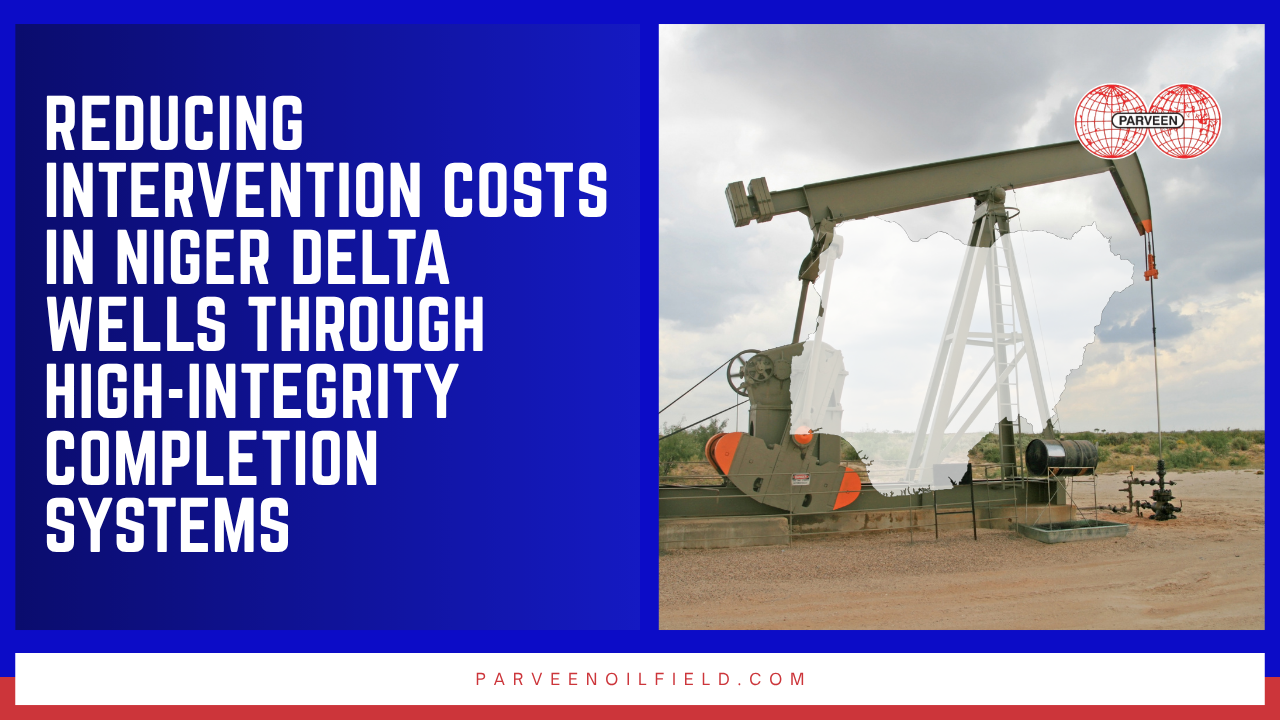
 Executive Summary: Nigeria’s Workover Wave and the Cost of Inadequate Completions
Nigeria’s onshore upstream sector has entered an intensive workover and well re-entry cycle that is defining the profitability of its new era of indigenous operator leadership. In 2026, seven oil-producing joint ventures and two sole risk operators have committed to re-entry and workover activity on more than 50 onshore and shallow offshore wells across the Niger Delta [1]. By early March 2026, eight wells were simultaneously undergoing workover from 54 locations equipped with drilling units, with TotalEnergies alone planning 17 rigless workovers between February and December 2026 [1].
This workover surge is partly a consequence of the major IOC divestment cycle — as Shell, ExxonMobil, and others transfer their onshore portfolios to indigenous operators, many of the assets involved carry years of deferred maintenance, aging downhole completion equipment, and wellhead systems that have never been systematically integrity-tested under their new operators’ programs. It is also a consequence of a structural truth about Niger Delta operations: sand-prone formations, corrosive produced fluids, and the operational challenges unique to Nigeria’s security environment create a completion equipment degradation environment that punishes under-specification far more quickly than comparable environments elsewhere.
Nigeria holds approximately 37 billion barrels of proven crude oil reserves and produces from 323 developed fields connected through 265 production processing stations across onshore and offshore terrains [2]. The country’s upstream sector has production capacity that significantly exceeds current output, and the gap between potential and actual production is, to a meaningful degree, a completion system reliability problem. Every workover on a Niger Delta well costs between USD 0.5 million and USD 5 million depending on well complexity, and every well that produces below its capability due to packer leakage, wellhead seal failure, or sand plugging represents forgone revenue and deferred fiscal receipts that Nigeria cannot afford.
Parveen Industries manufactures production packers, wellhead equipment, and downhole completion systems that are engineered from the outset to minimize intervention frequency in Niger Delta conditions — delivering the production continuity that Nigeria’s indigenous operators need to maximize recovery from their newly acquired assets.
Niger Delta Operating Conditions: Why High-Integrity Completions Are Essential
Sand-Prone Formations: The Agbada Formation — the primary oil-bearing interval across most of the Niger Delta — is composed of poorly consolidated sandstones that produce significant sand volumes alongside crude oil and associated gas, particularly in fields that have been producing for several decades and have experienced reservoir pressure decline. Sand production subjects completion equipment to continuous erosive wear on wellhead gate valves, choke valves, production tubing, and downhole packer seating surfaces. Packers installed without high-strength, sand-resistant sealing elements experience accelerated elastomeric degradation that results in loss of zonal isolation — typically requiring a workover within three to five years.
Corrosive Well Fluids: Niger Delta crude is typically associated with produced water with high chloride content, and many wells co-produce CO₂ and H₂S with the gas stream. Carbon steel completion components without appropriate elastomeric selection and material specification will experience accelerated degradation in this environment. Production packers with standard nitrile rubber elements in wells producing sour gas will experience premature seal degradation; gate valves with standard trim in high-chloride produced water service will develop seat leakage well before the end of their intended service life.
Rising Onshore Production Costs: Nigeria was once regarded as one of the world’s lowest-cost onshore producers. That position has been eroded by the security environment across the Niger Delta, with pipeline sabotage, wellhead theft, and the cost of private security coverage adding significantly to technical production costs [3]. The Trans-Niger Pipeline, with a capacity to carry 450,000 barrels per day from production fields to export terminals, has experienced sabotage-related disruptions that underscore the vulnerability of onshore infrastructure [3]. In this environment, every intervention — every workover that requires a rig, a service crew, and a security escort — is disproportionately expensive. Completion systems that reduce intervention frequency have an economic value that far exceeds their procurement premium.
Workover Campaign Scale: The commitment by operators to 50+ workovers across the Niger Delta in 2026 alone [1] signals not just the volume of deferred maintenance accumulated during the IOC era, but the recognition by incoming indigenous operators that production recovery from existing wellbores requires systematic completion integrity management. Many of these workovers are being driven by: packer seal failure requiring zonal isolation restoration; wellhead gate valve seat leakage requiring surface isolation restoration; gas lift valve degradation requiring artificial lift system re-optimization; and sand plugging requiring coil tubing cleanout.
Parveen Industries: High-Integrity Completion Solutions for Niger Delta Wells
Parveen Industries’ Niger Delta product portfolio is specifically configured for the sand, corrosion, and long-service life demands of Nigeria’s onshore and shallow offshore producing environment.
Production Packers — Permanent and Retrievable for Niger Delta Service Parveen’s production packer range for Nigerian service covers both hydraulic-set retrievable designs (for workovers and temporary zonal isolation) and permanent designs (for definitive completion architectures). For Niger Delta service specifically, Parveen recommends:
- High-strength elastomeric packer elements in HNBR compound for CO₂/H₂S resistance, replacing standard nitrile where sour service is anticipated
- Slips and cones manufactured from high-strength alloy steel to resist setting failure in partially consolidated sands
- Retrievable designs with positive shear-release mechanisms that operate reliably even after extended set periods in sand-producing wells
Wellhead & Xmas Tree Equipment For the Nigerian operators conducting integrity restoration programs on acquired OML assets, Parveen’s capability to supply dimensionally compatible replacement wellhead components is a critical service. Parveen’s engineering team works from the existing wellhead’s dimensional records to manufacture replacement casing head spools, tubing head seals, and complete wellhead and Christmas tree assemblies that integrate directly with the existing wellhead stack without modification. For new well completions, Parveen’s standard API 6A wellhead assemblies in 2,000–5,000 PSI WP cover the majority of Niger Delta onshore well specifications.
API 6A Gate Valves — Sand and Sour Service Specification For Niger Delta service where sand and sour fluids co-produce, Parveen’s gate valves are available with sealant injection provisions as standard — a feature that allows field personnel to restore gate-to-seat sealing without removing the valve from the wellhead. This eliminates the shut-in and valve change-out procedure for first-stage seat leakage, deferring the more costly replacement operation until a scheduled maintenance visit. NACE-compliant material grades are available for wells with confirmed H₂S exposure.
Surface Safety Valves Nigerian upstream regulations require surface safety valves on producing wellheads in specified zones, providing automated emergency shut-in capability. Parveen’s hydraulic and pneumatic surface safety valves are designed for fail-safe close actuation and compatibility with both manual and SCADA-based emergency shutdown systems. For wells in areas with security risk, remote actuation capability allows operators to shut in producing wells without requiring a physical site visit during security incidents.
Subsurface Safety Valves For Nigerian wells where control line infrastructure exists, Parveen’s tubing-retrievable and wireline-retrievable subsurface safety valves provide the downhole well integrity barrier required by NUPRC safety regulations. Wireline-retrievable designs allow replacement of a degraded SSSV without a full tubing pull workover — a significant cost reduction in wells where the control line remains functional but the valve itself has reached the end of its service life.
Gas Lift Equipment — Sustaining Niger Delta Production Gas lift is the dominant artificial lift method across the Niger Delta, and the integrity of gas lift valves and mandrels directly determines how effectively mature fields can be produced at economic rates. Parveen’s wireline-retrievable gas lift valves — in pilot-operated and injection-pressure-operated configurations — are manufactured to API 11V1 and are dimensionally compatible with the side-pocket mandrels widely deployed across Nigerian producing fields. Valve changes via wireline avoid full well workover costs and allow rapid reoptimization of gas lift rates as reservoir conditions change across the producing life of the field.
Bridge Plugs and Cement Retainers As indigenous operators conduct systematic well integrity assessments on acquired OML assets, many wells require squeeze cementing to repair zonal isolation failures identified during pressure testing. Parveen’s wireline-set drillable cement retainers and bridge plugs enable this remediation without full tubing pull workovers, reducing the cost and complexity of the integrity restoration campaign.
Equipment Relevance: Case Illustration — Production Packer Failure, Onshore Niger Delta
Scenario: An indigenous Nigerian operator, three years into ownership of an acquired OML, identifies that production from seven wells has declined by an average of 40% compared to the asset’s historical production profile. Well testing indicates that zonal isolation has been lost in each well — produced water from an aquifer zone has broken through the packer and is co-mingling with the oil producing zone, diluting the oil stream and reducing pressure in the production zone. All seven packers were installed under the previous IOC operator, using standard-specification nitrile-element packers in a well environment with confirmed CO₂ and trace H₂S.
Diagnosis: The standard nitrile packer elements, while acceptable for sweet oil service, have been chemically degraded by CO₂ exposure over an approximately 10-year service period, leading to elastomeric creep and loss of sealing contact.
Parveen’s Solution: Seven retrievable production packer replacements in HNBR elastomeric element specification, with CO₂-rated seals and NACE MR0175 metallic components for the trace H₂S exposure. Equipment supplied with full API 11D1 documentation and dimensional inspection records for the operator’s workover engineering files. Installation via wireline-set operations, avoiding the cost of full tubing pull workovers where rig access costs in the Niger Delta security environment are substantial.
 Frequently Asked Questions (FAQs)
Q1. What packer element compounds does Parveen recommend for Niger Delta wells with CO₂ and H₂S co-production? For wells with confirmed CO₂ and trace H₂S exposure, Parveen recommends HNBR (hydrogenated nitrile butadiene rubber) packer elements as the minimum specification, replacing standard nitrile. HNBR provides substantially superior resistance to CO₂ degradation and H₂S exposure while maintaining adequate temperature and pressure performance for most Niger Delta producing conditions. For wells with higher H₂S partial pressures, AFLAS compound is available. Parveen’s completion equipment engineers review the operator’s well fluid analysis before specifying elastomeric compounds — never applying a generic specification to wells with distinct fluid compositions.
Q2. Can Parveen supply wellhead gate valves with sealant injection ports for older Niger Delta wellheads? Yes. Sealant injection provisions are a standard feature on Parveen’s gate valves for Nigerian service and are particularly important for the Niger Delta environment where aging wellheads have often developed seat leakage that falls short of the threshold requiring immediate replacement but nonetheless compromises the integrity of the wellhead as a pressure containment system. Sealant injection allows a quick, cost-effective field response — restoring the gate-to-seat seal without removing the valve, shutting in the well, or mobilizing a replacement valve — and extends the service life of the valve body until a scheduled replacement can be planned.
Q3. Does Parveen supply gas lift valves compatible with the mandrel systems already in Nigerian fields? Yes. Parveen’s wireline-retrievable gas lift valves are manufactured in standardized OD profiles compatible with the major side-pocket mandrel systems deployed across Nigeria’s producing fields. Before manufacturing, Parveen’s gas lift application engineers review the operator’s existing completion program — including mandrel OD, valve pocket profile, and retrieving tool specifications — to confirm that replacement valves will be interchangeable with the installed mandrels without requiring any downhole intervention on the mandrel itself.
Q4. What are the logistics arrangements for shipping completion equipment to Nigeria? Parveen ships to Nigerian operators via sea freight to Lagos Apapa or Port Harcourt ports, with full export documentation including commercial invoice, packing list, certificate of origin, material certifications, and API compliance certificates. Air freight is available for urgent completions or workover programs where schedule pressure makes ocean freight impractical. Parveen coordinates with the operator’s Nigerian customs and import compliance team on HS code classification and NAFDAC/SON import requirements where applicable.
Q5. Can Parveen supply downhole completion equipment for coil tubing cleanout and re-entry programs on sand-plugged Niger Delta wells? Yes. Sand plugging in Niger Delta producing wells — particularly in wells where reservoir pressure decline has reduced natural flow velocity below the sand-transport threshold — is addressed through coil tubing cleanout programs. Parveen’s coiled tubing tools and associated pressure control equipment support these interventions, while bridge plugs and cement retainers address the zonal isolation issues that are frequently identified during re-entry programs.
Q6. What commercial terms can Parveen offer for Nigerian indigenous operators managing constrained workover budgets? Parveen understands the capital program constraints that Nigerian indigenous operators frequently manage, particularly in the early years of ownership following an acquisition. Parveen’s commercial team is available to discuss phased delivery schedules aligned with the operator’s workover program calendar, volume-based pricing for multi-well completion programs, and payment terms appropriate to the operator’s project financing structure. Parveen values long-term supply relationships with growing Nigerian independents and structures commercial arrangements accordingly. Contact the Nigeria team at parveenoilfield.com/ng/ to begin a commercial discussion.
Call to Action
Every workover on a Niger Delta well costs more than the one before it. The path to lower intervention frequency and higher production continuity starts with completion equipment that is specified for the actual conditions your wells operate in — not generic equipment that substitutes price for performance.
Partner with Parveen Industries for production packers, wellhead systems, gas lift equipment, and downhole completion tools engineered specifically for Niger Delta conditions.
📧 Visit parveenoilfield.com/ng/ to submit your equipment inquiry, discuss technical specifications, or request a consultation with Parveen’s Nigeria market team.
Parveen Industries — API-Compliant. Sand-Resistant. Niger Delta–Ready.
Data Sources & References
[1] The commitment by seven oil-producing joint ventures and two sole risk operators to 50+ re-entries and workovers on Niger Delta onshore and shallow offshore wells in 2026, including eight concurrent workovers from 54 drilling unit locations in early March 2026, and TotalEnergies’ plan for 17 rigless workovers from February to December 2026, is reported by Africa Oil Gas Report in March 2026 (https://africaoilgasreport.com/2026/03/oil-patch-sub-sahara/workover-campaigns-are-all-the-rage-in-nigerias-niger-delta/).
[2] Nigeria’s approximately 37 billion barrels of proven crude oil reserves, drawn from BP’s Statistical Review of World Energy, are cited in Discovery Alert’s March 2026 assessment (https://discoveryalert.com.au/deepwater-exploration-nigeria-energy-investment-2026/). The 323 developed fields, 265 production processing stations, and 31 export terminal figures are from the Nigerian Upstream Petroleum Regulatory Commission (NUPRC) Oil Production Status Report (https://www.nuprc.gov.ng/oil-production-status-report/).
[3] The characterization of rising onshore production costs driven by militancy, harassment, and security expenses outpacing technical production costs is drawn from The Guardian Nigeria’s reporting on indigenous producer challenges in January 2025 (https://guardian.ng/energy/how-indigenous-producers-can-navigate-onshore-challenges/). The Trans-Niger Pipeline capacity of 450,000 barrels per day and its exposure to sabotage risk is reported by Semafor in March 2025 (https://www.semafor.com/article/03/20/2025/nigerias-rivers-state-crisis-highlights-oil-sector-challenges).