
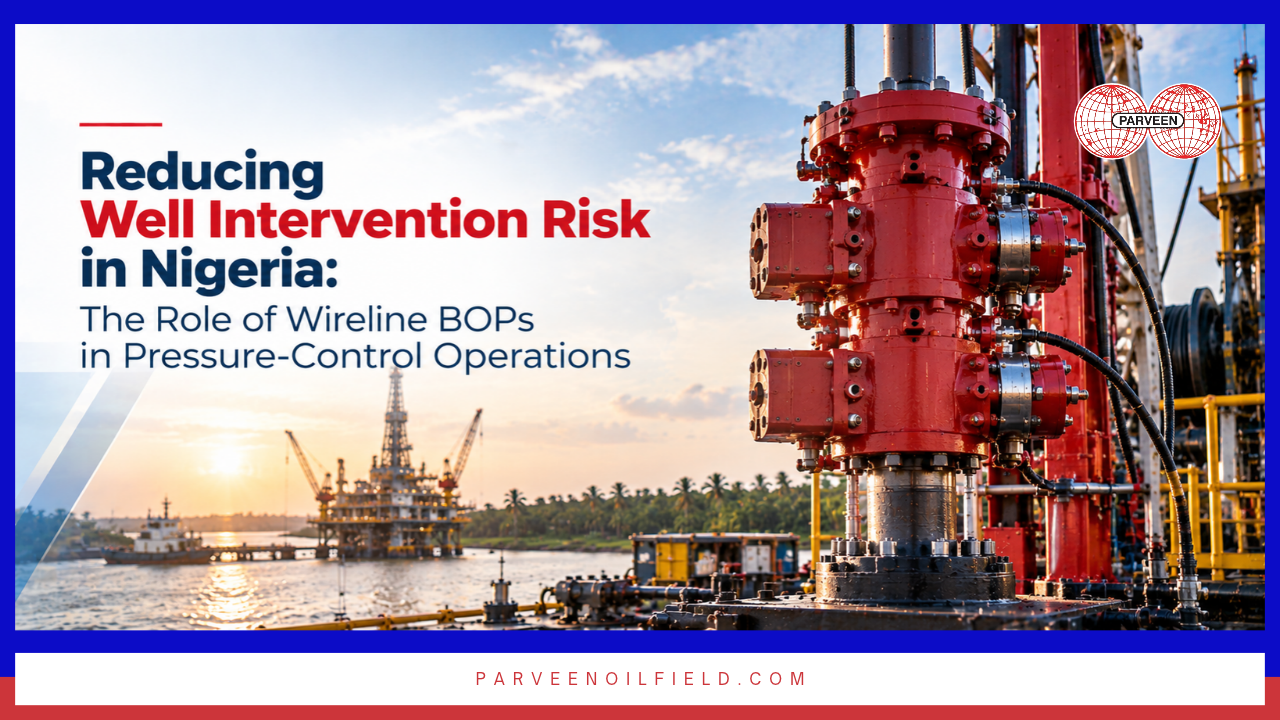
Nigeria’s upstream oil and gas sector is the foundation of the country’s economy and one of Sub-Saharan Africa’s most important hydrocarbon production bases. The Nigerian Upstream Petroleum Regulatory Commission (NUPRC) reported crude oil and condensate production of approximately 1.3 to 1.5 million barrels per day (bpd) in 2024, recovering from a period of production disruption driven by pipeline vandalism, crude oil theft, and field maintenance deferrals [1]. The Nigerian government’s Petroleum Industry Act (PIA), enacted in 2021, has progressively reformed the regulatory and commercial framework for upstream investment, providing the stability needed to attract new capital into brownfield redevelopment and greenfield deepwater projects. TotalEnergies, Shell (SPDC), ENI (Agip), ExxonMobil (now Seplat in some assets), and indigenous operators including Seplat Energy, Eroton, Aiteo, and Heirs Holdings are all active in the Nigerian upstream.
Maintaining and growing production from Nigeria’s mature Niger Delta fields requires intensive well intervention activity. Many of Nigeria’s producing wells were drilled in the 1980s and 1990s and are now entering enhanced production management phases, requiring wellbore diagnostic logging, downhole equipment replacement, gas lift optimisation, and production string repairs through wireline operations [2]. Wireline, both slickline and electric line (e-line), is the primary intervention technique for these operations, deployed on live wells under surface wellhead pressure to run and retrieve downhole tools through the production string.
The wireline blowout preventer (BOP) is the safety-critical surface pressure control device that enables all live-well wireline operations. Mounted on the wellhead above the Christmas tree, the wireline BOP provides a pressure-rated seal around the wireline cable during run-in and pull-out, and provides emergency full closure and shear capability if the wireline must be cut and the wellbore sealed in an emergency. The correct specification of wireline BOPs, in terms of pressure rating, configuration (single, dual, or triple), bore size, and material, is the first engineering decision that determines whether a wireline operation can be conducted safely and within the well’s pressure and temperature envelope.
Parveen Industries manufactures API-compliant single, dual, and triple wireline BOPs for the upstream oil and gas market, including Nigeria’s demanding onshore and offshore wireline service requirements. This article examines the technical and operational considerations for wireline BOP selection in Nigeria’s upstream environment, and how Parveen’s product range supports Nigerian operators, oilfield service companies, and procurement teams in specifying appropriate wireline pressure control equipment.
Nigeria’s wireline BOP procurement market has historically been served by international service companies deploying their own equipment, but the indigenisation drive supported by the Nigerian Content Development and Monitoring Board (NCDMB) and the requirements of the Petroleum Industry Act (PIA) are increasingly compelling international service companies and Nigerian operators to localise equipment procurement, creating an opportunity for non-OEM API-compliant manufacturers like Parveen to supply certified wireline pressure control equipment directly to the Nigerian market [3].
Wireline Operations and the Pressure Control Requirement
What Wireline Operations Involve
Wireline intervention is the practice of lowering tools and instruments into a pressured wellbore on a continuous cable, either a single-strand slickline (a smooth, flexible wire) or a multi-conductor armoured electric line. Slickline is used for mechanical operations: setting and retrieving downhole valves, replacing gas lift valve mandrel components, running plugs and packers, and removing scale or debris. Electric line (e-line) is used for logging: running gamma ray, resistivity, production logging, and cement bond tools on a cable that carries both mechanical load and electrical signals to surface instrumentation.
Both slickline and e-line operations are performed on live wells, the wellbore is under its native production pressure throughout the run. The cable passes from the surface through the wellhead into the pressured wellbore, requiring a pressure-sealed cable passage at the wellhead that allows the cable to move freely (in and out) while preventing wellbore pressure from escaping around the cable. The wireline BOP provides both the dynamic seal (stuffing box) around the moving cable and the emergency closure capability (BOP rams) if the cable must be cut and the well closed [4].
Why BOP Configuration Matters in Nigeria
In Nigeria’s Niger Delta, wellbore pressures at typical production depths range from 1,500 to 5,000 psi for onshore and shallow offshore wells, and may reach 10,000 psi or higher in deepwater sub-salt formations. Wireline BOPs must be rated to contain the maximum anticipated wellhead pressure for the specific well being serviced, with an adequate safety margin.
Beyond pressure rating, the BOP configuration, single, dual, or triple, determines how many independent pressure barriers are available at surface. The International Association of Drilling Contractors (IADC) and most operators’ well intervention standards require a minimum of two independent pressure barriers between the wellbore and the surface environment during live-well wireline operations. A single wireline BOP provides one seal (the stuffing box/stripper) as the primary barrier and one ram as the secondary barrier, two barriers total, one of which is the dynamic cable seal. A dual BOP provides two rams plus the stripper, three barriers. A triple BOP provides three rams plus the stripper, four barriers, and is typically specified for well intervention in deepwater or high-pressure applications where the consequence of a barrier failure is severe.
For Nigerian onshore wells operated by Shell SPDC, Eroton, Aiteo, and others in the Warri, Port Harcourt, and Bayelsa operational areas, dual wireline BOPs are the standard minimum configuration for live-well slickline and e-line operations. For deepwater OML operations (TotalEnergies, ENI, Shell deepwater), triple BOPs and enhanced pressure control packages are specified in line with deepwater well intervention risk assessment requirements.
Key Technical Considerations for Wireline BOP Selection in Nigeria
Pressure Rating
The wireline BOP pressure rating must equal or exceed the maximum anticipated wellhead tubing pressure for the well being serviced, with a safety margin applied per the operator’s well control standards. For onshore Niger Delta wells, the majority of wireline BOPs are rated to 5,000 or 10,000 psi. For shallower wells or low-pressure production operations, 3,000 psi-rated BOPs may be sufficient.
A critical procurement error in the Nigerian market, particularly among smaller indigenous oilfield service companies, is specifying BOPs by well’s current flowing wellhead pressure (FWHP) rather than by shut-in tubing pressure (SITP). If the well’s SITP is significantly higher than the FWHP, and the BOP is rated only to the FWHP, any event that requires closure under SITP conditions will exceed the BOP’s rated capacity. API and industry standards require wireline BOPs to be rated to the maximum anticipated wellbore pressure, which is the SITP, not the flowing pressure.
Single, Dual, and Triple BOP Configurations
Single Wireline BOP: One ram body providing one emergency shear/seal function. Used in conjunction with a stuffing box (which provides the dynamic primary seal). Minimum configuration for low-pressure, low-risk wireline work. Suitable for non-flowing wells, pressure testing, and routine slickline operations on wells with benign pressure profiles and immediate accessibility to close the master valve in an emergency.
Dual Wireline BOP: Two ram bodies stacked in series, providing two independent emergency closure functions below the stuffing box. Each ram body typically contains either a shear ram (which cuts the wireline and seals the bore) or a pipe/wireline ram (which seals around the wire without cutting it). The dual configuration provides the two-independent-barrier standard required by most major operators in Nigeria’s Niger Delta, allowing the upper ram to seal around the wire for a controlled closure while the lower ram provides a backup full closure if required.
Triple Wireline BOP: Three ram bodies in series, providing three independent emergency closure functions. The triple configuration is specified for deepwater wireline operations in Nigeria (TotalEnergies Egina, ENI Agabu, Shell Bonga), for wells with particularly high-consequence well control exposure, or where the operator’s well control standard specifies three independent barriers for the specific intervention risk category. The increased number of barriers reduces the probability of a single well control event resulting in an uncontrolled release, critical when working over Nigerian deepwater OMLs where weather conditions, vessel motion, and remote logistics make emergency response more complex.
Bore Size and Stuffing Box Compatibility
Wireline BOPs are manufactured in specific bore sizes calibrated to the stuffing box bore and the wireline cable OD. Common bore sizes range from 1-9/16″ to 3-1/16″ for standard slickline and electric line service. The ram elements (sealing elements) within each BOP body must be sized for the specific cable OD being run, typically in 0.092″ to 0.500″ cable diameter increments. Mismatching the ram element to the cable OD results in poor sealing or inability to pass the cable through the BOP stack.
Sealing Mechanism and Material
Wireline BOP rams for slickline service use elastomeric sealing elements that compress against the cable and bore wall to create a pressure seal. The elastomer choice depends on the wellbore fluid service: NBR (nitrile) for sweet service below 212°F; HNBR for moderate sour service or elevated temperatures up to 302°F; FKM (Viton) for temperatures up to 392°F or high CO₂/H₂S service. For Nigeria’s Niger Delta oil wells, where crude is predominantly sweet (low H₂S) but temperatures may reach 160–220°F, NBR or HNBR elements are standard. For sour gas wells in the northeastern formations, FKM elements are recommended.
Parveen Industries’ Wireline BOP Portfolio for Nigeria
Parveen Industries’ surface pressure control equipment range includes a complete portfolio of API-compliant wireline blowout preventers for Nigeria’s upstream well intervention market:
Single Wireline BOP: Single-body wireline BOP providing one emergency ram closure function. Available in rated working pressures 3,000, 5,000, and 10,000 psi. Bore sizes 1-9/16″, 2-1/16″, and 2-9/16″. Ram configurations: shear seal or pipe/wireline ram. Elastomeric seal elements in NBR, HNBR, or FKM based on service conditions. Flanged end connections (top and bottom) conforming to API 6A dimensional standards for direct installation on Christmas tree master valve outlets.
Dual Wireline BOP: Two-body stacked wireline BOP assembly providing two independent ram closure functions, meeting the two-independent-barrier standard required by most Niger Delta operator well intervention procedures. Available in 3,000, 5,000, and 10,000 psi RWP. Top body: pipe/wireline ram for controlled closure around the wire; bottom body: shear/seal ram for emergency wire cut and bore seal. Available as a pre-assembled dual-body unit for fast rig-up, or as separate bodies for flexible configuration. Supplied with complete pressure test certification.
Triple Wireline BOP: Three-body stacked assembly providing three independent ram closures for deepwater, high-pressure, or high-consequence wireline intervention. 5,000 and 10,000 psi RWP. Three-body configuration: pipe ram (top) + pipe/wireline ram (middle) + shear/seal ram (bottom). All three bodies dimensionally matched for direct stacking. Used by deepwater wireline service companies operating in Nigeria’s OML 127, OML 130, and OML 138 deepwater blocks.
Blowout Preventers (BOP): Parveen’s full BOP range, including conventional ram BOPs for drilling and workover service, available in sizes and pressure ratings conforming to API 16A requirements.
Wellhead & Christmas Tree Assemblies: API 6A compliant wellhead and Christmas tree packages for Nigerian upstream development wells, incorporating wireline-access ports and dedicated swab valve outlets for wireline BOP installation above the tree.
Gate Valves (API 6A): Slab and expanding gate valves for Christmas tree wing valve and master valve applications, providing the primary isolation layer below the wireline BOP during wireline operations.
Choke and Kill Manifold: API 16C compliant choke and kill manifolds that interface with the wellhead system, providing well control capability during any wireline operation that encounters a well control event requiring full BOP closure and well kill.
Production Packers / Completion Equipment: Downhole completion equipment, including production packers, bridge plugs, and cement retainers, that may be set or retrieved during wireline-conveyed workover operations using the wireline BOP stack as the surface pressure control barrier.
Case Illustration: Dual Wireline BOP Deployment for Gas Lift Valve Replacement, Onshore Niger Delta
An onshore Nigerian operator (Eroton Exploration and Production) has a well in Bayelsa State that requires a gas lift valve (GLV) change-out at 4,500 feet depth. The well is on continuous gas lift with a flowing wellhead pressure of 350 psi and a shut-in tubing pressure of 1,800 psi. The wireline service company specifies a dual wireline BOP rated to 3,000 psi (exceeding the 1,800 psi SITP with margin) with a 1-9/16″ bore configured for 0.125″ slickline.
The BOP is installed on the Christmas tree swab valve outlet. The upper body contains a pipe/wireline ram and the lower body contains a shear/seal ram. The stuffing box (also 3,000 psi-rated) is installed above the dual BOP, providing the primary dynamic seal during wire movement. The gas lift kickover tool is run on 0.125″ slickline through the stuffing box and dual BOP to the target depth GLV mandrel at 4,500 feet, where it engages and retrieves the worn GLV. A new GLV is then run and kicked over into the mandrel pocket.
At the conclusion of the operation, the slickline is pulled out of the hole through the stuffing box and dual BOP, and the stuffing box is bled off before demounting the wireline pressure control stack. The complete operation, from BOP installation to final bleed-off, takes approximately 6 hours and is conducted under full pressure control throughout, with no exposure of the surface environment to wellbore hydrocarbons.
This operation illustrates the routine but essential role of the dual wireline BOP in Nigeria’s gas lift-assisted well portfolio, where hundreds of GLV change-out operations are performed annually across Niger Delta producing fields.
Frequently Asked Questions
Q1: What is the minimum BOP configuration required for live-well wireline operations in Nigeria under current regulatory and operator standards?
Most Nigerian operator well intervention standards, aligned with Shell SPDC, TotalEnergies, and NUPRC requirements, specify a minimum of two independent pressure barriers between the wellbore and the surface environment during live-well wireline operations. In practice, this means a dual wireline BOP (two independent ram closures) plus a stuffing box (primary dynamic seal) is the minimum recommended configuration. A single BOP plus stuffing box provides only one fixed barrier (the stuffing box being the primary dynamic seal), which is generally considered insufficient for standard Niger Delta onshore well intervention without additional mitigations. NUPRC’s Well Control Regulations require that all wireline operations be conducted in conformity with the approved well programme, which will specify the minimum BOP configuration.
Q2: How does Parveen size wireline BOP ram elements for different wireline cable ODs?
Each wireline BOP body supplied by Parveen is configured with ram elements (sealing elements) sized for a specific wireline cable OD. Ram elements are available for cable ODs ranging from 0.092″ (light slickline for shallow wells) to 0.500″ (heavy slickline and electric line composite cable). The bore of the BOP body must be large enough to pass the cable OD freely, while the ram element provides a tight seal around the cable when the ram is closed. Parveen supplies interchangeable ram element kits for each BOP body, allowing the service company to configure the same BOP body for different cable sizes by changing out the ram elements in the field, without replacing the complete BOP assembly.
Q3: Does Parveen supply wireline BOPs rated for Nigeria’s deepwater applications at TotalEnergies, ENI, and Shell OML blocks?
Yes. Parveen manufactures wireline BOPs in 5,000 psi and 10,000 psi rated working pressure classes suitable for deepwater OML well intervention in Nigeria. Triple BOP configurations (three independent ram closures) are available for deepwater service where operator well control standards require three barriers. Parveen’s deepwater BOP configurations are supplied with full pressure test documentation and third-party inspection (TPI) certification from internationally recognised inspection agencies. For deepwater applications, Parveen’s engineering team can review the specific operator’s well intervention program and confirm the appropriate BOP configuration, pressure rating, and elastomer selection for the wellbore fluid service conditions.
Q4: What documentation does Parveen provide with wireline BOPs for Nigeria?
Standard documentation supplied with every Parveen wireline BOP order includes: API Monogram compliance declaration, material test reports (MTRs) for all pressure-containing components, dimensional inspection report, hydrostatic body pressure test certificate (1.5× RWP), ram sealing test certificate, visual inspection report, and traceability documentation. For Nigerian operators and service companies requiring TPI, Parveen can facilitate third-party inspection by Bureau Veritas, Lloyd’s Register, SGS, or other client-nominated inspection bodies at the manufacturing facility prior to despatch. NCDMB local content compliance documentation is available to assist Nigerian buyers with local content reporting.
Q5: How does Parveen’s wireline BOP compare to international OEM products in terms of pressure integrity and sealing performance?
Parveen’s wireline BOPs are manufactured to the same API dimensional and testing standards as international OEM products, API 6A for pressure-containing components and API/industry standards for wireline pressure control equipment. Factory acceptance testing includes hydrostatic body pressure testing at 1.5× rated working pressure and seal function testing at rated working pressure, conducted on 100% of units supplied. Parveen uses the same metallurgical specifications (AISI 4130, 4140, and alloy steels) and elastomeric seal materials (NBR, HNBR, FKM) as international OEM manufacturers. The key commercial advantage of Parveen’s supply is price competitiveness relative to branded OEM equipment, without compromising on the API-tested performance standards required for safe wireline operations.
Q6: What is the typical delivery lead time for Parveen wireline BOPs to Nigeria, and are expedited shipments available?
Standard single and dual wireline BOP configurations in common bore sizes and pressure classes (5,000 psi, 1-9/16″ and 2-1/16″ bore) are typically available for despatch within 4–8 weeks from confirmed purchase order. Triple BOP assemblies and custom configurations require 8–14 weeks. All units are available for air freight despatch to Lagos (Murtala Muhammed International Airport) or Port Harcourt (Port Harcourt International Airport) for urgent requirements. Sea freight via Lagos Apapa Port or Port Harcourt Port Harcourt is the standard shipment method for bulk or non-urgent orders. Parveen’s export team can prepare all shipping documentation, including export invoices, packing lists, certificates of origin, and Nafdac/SON compliance documents as required by Nigerian import regulations.
Evaluate Wireline BOP Options for Your Nigerian Operations
Nigerian operators, oilfield service companies, drilling contractors, and procurement teams sourcing wireline BOPs and surface pressure control equipment are invited to contact Parveen Industries. Parveen’s engineering team can review well programme data, confirm appropriate BOP configuration and pressure rating, and provide detailed product drawings, testing documentation, and commercial quotations.
📧 Contact Parveen Industries, Nigeria Website: parveenoilfield.com/ng/ Email: info@parveen.in
Explore the full surface pressure control and well intervention equipment range at parveenoilfield.com/ng/surface-pressure-control-equipment/ or view all products at parveenoilfield.com/ng/products/.
Data Sources & References
[1] Nigeria Upstream Production Data, NUPRC (Nigerian Upstream Petroleum Regulatory Commission). Crude oil and condensate production reports, 2024–2025. https://www.nuprc.gov.ng/
[2] Nigeria Well Intervention Activity, Aquaterra Energy / World Oil. “Aquaterra awarded Nigeria subsea well intervention work with Intrepid Energy.” World Oil, March 2025. https://worldoil.com/news/2025/3/27/aquaterra-awarded-nigeria-subsea-well-intervention-work-with-intrepid-energy/
[3] NCDMB Nigerian Content Requirements, Nigerian Content Development and Monitoring Board. Local content obligations for upstream petroleum operations in Nigeria. Petroleum Industry Act (PIA) 2021, Chapter 3. https://www.ncdmb.gov.ng/
[4] Wireline Operations and Pressure Control, ICOTA (Intervention and Coiled Tubing Association). Technical references for wireline well intervention, BOP configuration requirements, and pressure control equipment selection. https://www.icota.com/technical/wireline